
April 7, 2026 | SNAK Consultancy
Share on :
How Enterprises Can Successfully Integrate Emerging Technologies into Their Workflows
Introduction
In today’s fast-paced digital landscape, enterprises must continuously evolve to stay competitive. One of the most effective ways to achieve this is by integrating emerging technologies into business workflows. From Artificial Intelligence (AI) and Data Analytics to Cloud Computing and Automation, these technologies are transforming how organizations operate.
However, successful integration requires more than just adopting new tools—it demands a strategic approach, proper planning, and expert execution.
In this blog, we explore how enterprises can seamlessly integrate emerging technologies and maximize business value.
What Are Emerging Technologies?
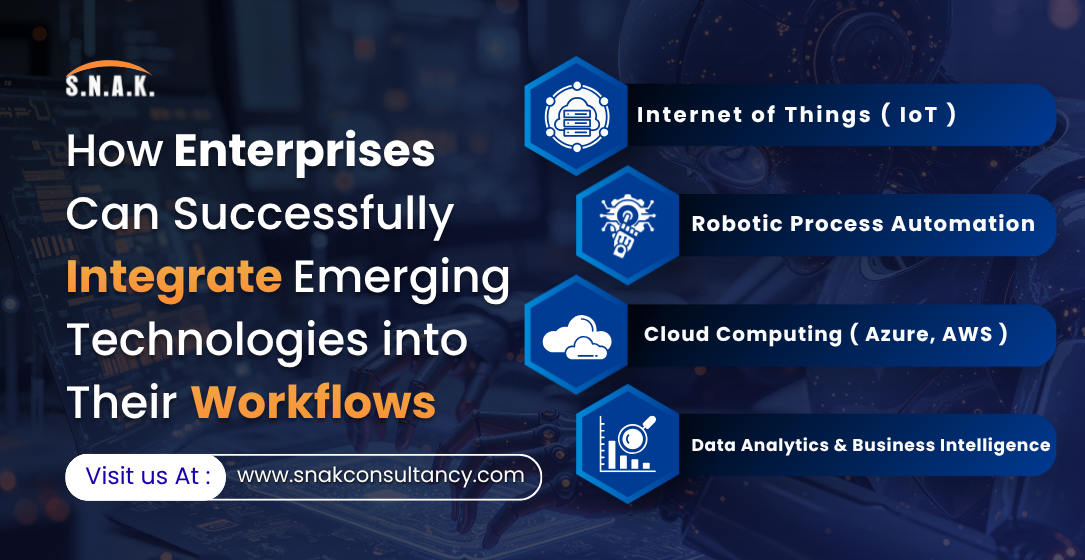
Emerging technologies refer to innovative tools and systems that are rapidly evolving and reshaping industries. Some of the most impactful technologies include:
1. Artificial Intelligence (AI)
2. Machine Learning (ML)
3. Data Analytics & Business Intelligence
4. Cloud Computing (Azure, AWS)
5. Robotic Process Automation (RPA)
6. Internet of Things (IoT)
These technologies enable enterprises to automate processes, improve efficiency, and make data-driven decisions.
Why Integration of Emerging Technologies Matters
Enterprises that successfully adopt emerging technologies gain a significant competitive advantage.
Key Benefits:
✔ Improved operational efficiency
✔ Faster decision-making with real-time data
✔ Enhanced customer experience
✔ Cost reduction through automation
✔ Scalability and business growth
Ignoring these advancements can lead to inefficiencies, lost opportunities, and reduced market competitiveness.
Step-by-Step Guide to Successful Integration
1. Define Clear Business Objectives
Before implementing any technology, enterprises must identify:
1. What problems they want to solve
2. What outcomes they expect
3. How success will be measured
Aligning technology with business goals ensures maximum ROI.
2. Assess Current Infrastructure
Evaluate existing systems and processes to determine:
1. Compatibility with new technologies
2. Gaps in infrastructure
3. Areas that need improvement
This step helps avoid integration challenges and disruptions
3. Choose the Right Technology Stack
Selecting the right tools is crucial. Enterprises should focus on:
1. Scalable solutions
2. Cloud-based platforms
3. AI-driven tools
4. Integration-friendly technologies
For example:
1. AI for automation
2. Data analytics for insights
3. Cloud platforms for scalability
4. Start with Pilot Projects
Instead of implementing technology across the organization at once:
1. Begin with a small pilot project
2. Test performance and results
3. Identify challenges and improvements
This reduces risk and ensures smoother implementation.
5. Focus on Data Integration
Data is the backbone of digital transformation. Enterprises must:
1. Integrate data from multiple sources
2. Ensure data accuracy and quality
3. Use analytics tools for insights
A strong data foundation enables better decision-making and automation.
6. Train Employees and Build Skills
Technology adoption fails without proper training. Enterprises should:
1. Conduct training programs
2. Upskill employees in AI, analytics, and automation
3. Encourage a culture of innovation
A skilled workforce ensures successful implementation and adoption.
7. Ensure Security and Compliance
With new technologies come new risks. Enterprises must:
1. Implement strong cybersecurity measures
2. Ensure data privacy compliance
3. Monitor systems continuously
Security is critical for maintaining trust and reliability.
8. Partner with Technology Experts
Working with experienced consulting firms helps:
1. Accelerate implementation
2. Reduce risks
3. Ensure best practices
Technology partners like SNAK Consultancy provide end-to-end solutions for AI, SAP, cloud, and analytics integration.
Common Challenges in Technology Integration
While integrating emerging technologies offers many benefits, enterprises may face challenges such as:
1. Resistance to change from employees
2. High initial investment costs
3. Integration with legacy systems
4. Data silos and poor data quality
5. Lack of technical expertise
Overcoming these challenges requires strategic planning and expert guidance.
Best Practices for Successful Integration
To ensure success, enterprises should follow these best practices:
✔ Align technology with business strategy
✔ Focus on scalability and flexibility
✔ Use data-driven decision-making
✔ Continuously monitor performance
✔ Adopt a phased implementation approach
Real-World Impact of Emerging Technologies
Enterprises across industries are already benefiting from technology integration:
1. Manufacturing: Predictive maintenance using AI
2. Retail: Personalized recommendations through data analytics
3. Finance: Fraud detection using machine learning
4. Healthcare: Improved patient care with data insights
These use cases highlight the transformative power of emerging technologies.
Future of Enterprise Technology Integration
The future will see deeper integration of technologies such as:
1. AI-driven automation
2. Advanced analytics
3. Cloud-native applications
4. Hyper-personalization
Enterprises that adopt these technologies early will gain a strong competitive advantage.
Questionnaire
1. What are emerging technologies in business?
Emerging technologies include AI, machine learning, data analytics, cloud computing, and automation tools that help businesses improve efficiency and decision-making.
2. Why is technology integration important for enterprises?
It improves operational efficiency, enhances customer experience, reduces costs, and enables data-driven decision-making.
3. What are the biggest challenges in integrating new technologies?
Common challenges include resistance to change, high costs, legacy system compatibility, and lack of expertise.
4. How can enterprises ensure successful technology adoption?
By defining clear goals, starting with pilot projects, training employees, and working with experienced technology partners.
5. How does AI help in enterprise workflows?
AI automates repetitive tasks, analyzes data, predicts trends, and improves decision-making processes.
Conclusion
Integrating emerging technologies into enterprise workflows is essential for growth, efficiency, and innovation. However, success depends on a well-defined strategy, the right tools, and expert implementation.
By leveraging technologies like AI, data analytics, and cloud computing, enterprises can transform their operations and achieve sustainable growth.
Call to Action
Ready to integrate emerging technologies into your business?
Partner with SNAK Consultancy to implement AI, Data Analytics, SAP, and Cloud solutions tailored to your enterprise needs.